How Does a Rose Vibrator Work? Air-Pulse Suction Explained
How Does a Rose Vibrator Work? Air-Pulse Suction Explained Free Xxx Video
A rose vibrator may look simple from the outside, but the sensation it creates can be very different from that of a traditional vibrating toy. The familiar flower-shaped design usually places a soft opening in the center of the rosebud, allowing stimulation to stay concentrated around a small external area rather than spreading vibration across a larger surface.
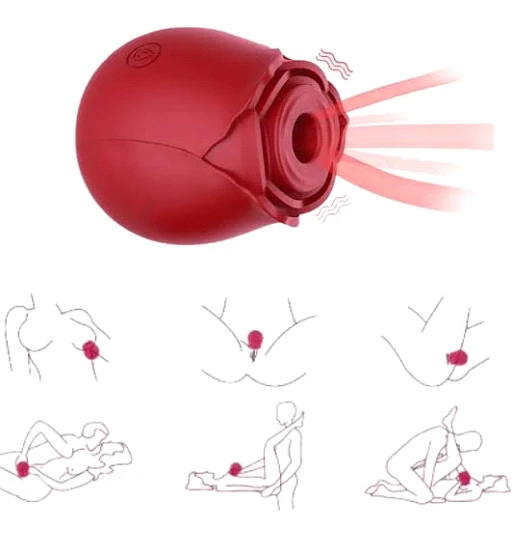
Many people use the term rose vibrator for the entire category, but not every model works in exactly the same way. Some use rapidly changing air pressure to produce suction-like pulses, some rely on conventional vibration, and newer designs may combine air pulse, vibration, tongue-style movement or multiple forms of stimulation in one device.
Understanding the difference matters because two rose-shaped toys can look almost identical while delivering completely different sensations.
What Is a Rose Vibrator?
A rose vibrator is a compact, flower-shaped pleasure product designed mainly for external clitoral stimulation. Its rosebud appearance is part of what made the category recognizable, but the important part is what happens inside the device.
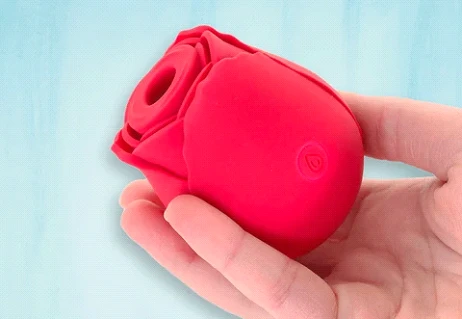
Classic air-pulse models feature a soft circular opening surrounded by silicone petals. Instead of simply vibrating against the skin, an internal mechanism repeatedly changes the air pressure inside that opening.
Those pressure changes create a rhythmic pulse-and-release sensation that users often describe as suction.
Other models add conventional vibration to the rose toy bud itself. This means the term Rose Vibrator can refer to several related designs rather than one single internal mechanism.
That is why it is useful to check how a specific model works instead of judging it only by its flower shape.
How Does Rose Vibrator Suction Actually Work?
The word “suction” can be slightly misleading.
A classic air-pulse rose does not necessarily behave like a small vacuum that continuously pulls on the body. Instead, a motor inside the device moves a flexible membrane or similar internal component rapidly back and forth.
As that mechanism moves, it changes the air pressure inside the chamber behind the central opening.
When the opening is positioned lightly around the external clitoral area, those repeated changes in pressure become concentrated at the point of contact.
The basic cycle is simple: pressure change → focused pulse → release → repeat.
Because the stimulation is focused around the opening, relatively small changes in positioning can noticeably alter how strong or precise the sensation feels.
For a more detailed explanation of the mechanism, this guide to how a Rose Toy works looks more closely at air-pulse stimulation and how it differs from ordinary vibration.
Is a Rose Vibrator the Same as a Traditional Vibrator?
Not always. A traditional vibrator normally uses a rotating or oscillating motor to transfer mechanical vibration directly through the surface of the toy. The user feels the movement wherever the vibrating surface touches the body.
An air-pulse rose works differently. Its main sensation comes from repeated changes in pressure around a small opening.
That makes the stimulation more concentrated.
There are also combination models that use both systems. A rose vibrator may provide air-pulse stimulation through the opening while the surrounding silicone body also vibrates.
Neither technology is automatically better. They simply produce different types of sensation.
Someone who enjoys broad, continuous buzzing may prefer conventional vibration, while someone looking for more concentrated stimulation may prefer an air-pulse design. Combination models are designed for people who want access to both.
Why Does Positioning Matter So Much?
Positioning is one of the biggest differences between a rose vibrator and many traditional vibrators.
With an ordinary vibrator, moving the toy slightly may still leave a large vibrating surface in contact with the body.
An air-pulse rose depends much more on the relationship between the opening and the area being stimulated.
If the opening has light, consistent contact, the pressure changes remain focused. If the angle changes or the seal repeatedly breaks, the sensation may feel weaker or less concentrated.
This does not mean the device needs to be pressed down hard. In many cases, gentle contact and small adjustments work better than additional pressure.
For first-time users, it usually makes sense to begin on a low setting, find a comfortable position and then increase intensity gradually. A full step-by-step guide to how to use a Rose Toy covers positioning, preparation and intensity control in more detail.
What Do the Different Modes Actually Change?
Many rose vibrators include several intensity levels or stimulation patterns.
On an air-pulse model, changing the setting may affect how quickly or strongly the internal mechanism changes the pressure inside the chamber.
A lower level can create slower or gentler pulses. Higher settings usually increase the intensity or frequency.
Pattern modes may alternate between stronger and softer pulses rather than maintaining one constant rhythm.
Combination models can become more complicated because suction and vibration may have separate controls.
This is another reason why counting the number of modes alone does not tell you whether one rose vibrator is better than another. Ten well-spaced intensity levels may be more useful than twenty settings that feel almost identical.
A good design should provide enough range for the user to start gently and adjust without immediately jumping to maximum intensity.
Why Do Rose Vibrators Feel Different From One Another?
The internal motor is only one factor.
The size and softness of the central opening can affect positioning. The firmness of the silicone can influence comfort. The shape of the rosebud affects how easily the device can be held and angled.
Even two air-pulse products can feel different if their openings, motors or pressure patterns are not the same.
Battery condition can also matter. A nearly depleted battery may cause some rechargeable devices to perform differently from when they are fully charged.
The exact stimulation method matters as well. Some rose-shaped products use air pulse, some use vibration, some use moving silicone tongues, and others combine external stimulation with additional attachments.
The flower shape tells you what the product looks like. It does not always tell you what the product does.
Can You Use a Rose Vibrator in the Shower?
That depends entirely on the waterproof rating of the individual model.
“Rose vibrator” describes a product category, not one universal specification. Some models are designed with waterproof housings, while others may only tolerate limited contact with water.
Before using any rechargeable toy in a shower or bath, check the stated waterproof or water-resistance rating for that exact product.
The charging port or magnetic contacts should also be completely dry before the device is connected to power.
If water use is important to you, read the product specifications rather than assuming every rose-shaped device is waterproof. This guide explains in more detail whether a Rose Toy is waterproof and what to check before using one around water.
What Should You Look for When Choosing One?
The rose shape itself should be one of the last things you compare because many products now share a similar appearance.
Start with the stimulation technology. Decide whether you want air-pulse suction, traditional vibration or a combination of the two.
Then check the range of intensity settings and how the controls work. A toy that is difficult to adjust during use can become frustrating even if the motor is powerful.
Materials also matter. Look for clearly stated product specifications instead of vague descriptions such as “premium material.”
Waterproof information should include a specific rating or clear care instructions.
Charging method and battery life are practical considerations, especially if the device uses a proprietary magnetic charging cable.
Noise level may also matter for people who value privacy.
Finally, look at the retailer’s return policy, support information and replacement options. A pleasure product is still an electronic device, and clear after-sales information can be just as important as the number of stimulation modes.
How Should a Rose Vibrator Be Cleaned?
Cleaning instructions depend on the material and waterproof rating of the specific device.
For a washable model, the outer silicone surface and accessible area around the stimulation opening should generally be cleaned after use according to the manufacturer’s instructions.
Residue should not be allowed to remain around the petals or inside the accessible part of the opening.
After cleaning, the device should be allowed to dry completely before it is stored or connected to a charger.
Avoid assuming that an electronic toy can be boiled or placed in a dishwasher simply because the outside is made from silicone. Internal motors, batteries and seals can be damaged by heat or inappropriate cleaning methods.
So, How Does a Rose Vibrator Really Work?
The answer depends on the model.
A classic air-pulse rose uses rapid changes in pressure around a small central opening to produce focused, rhythmic stimulation. A traditional vibrating version transfers mechanical movement directly through the toy’s surface. Combination models can provide both sensations at the same time.
That distinction explains why two products that look almost identical can feel completely different in use.
The best way to compare rose vibrators is to look beyond the flower shape and check the stimulation technology, intensity range, materials, controls, waterproof rating and charging system.
Once you understand what is happening inside the rosebud, the category becomes much easier to navigate—and the term “rose vibrator” starts to describe more than just the shape of the product.